
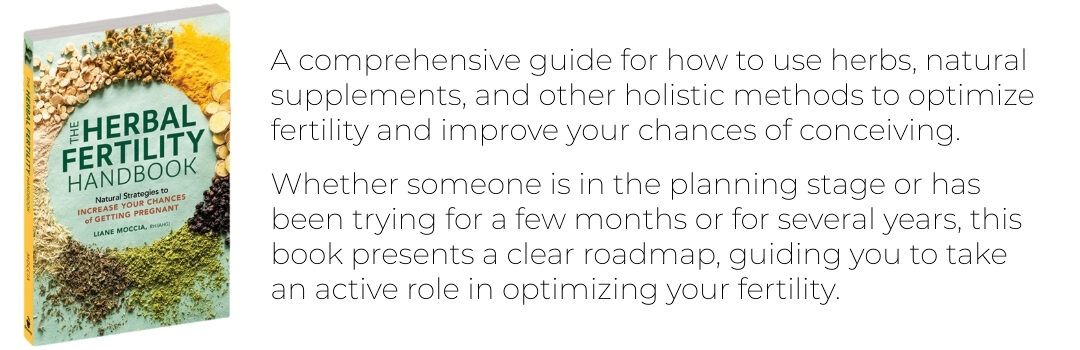
Excerpted from The Herbal Fertility Handbook (c) by Liane Moccia RH (AHG), used with permission from Storey Publishing.
Herbal Support During Fertility Treatments
How to Safely Use Herbs Before and After
Fertility treatments are a highly precise process where every element is carefully controlled. While some herbs provide supportive benefits, it’s important to know what is safe to use and what should be avoided during this time.
When to Avoid Herbs and When to Return to Them
Assisted reproductive technologies (ARTs) are fertility treatments that include ovulation-stimulation medications (such as clomiphene [Clomid] and letrozole), intrauterine insemination (IUI), in vitro fertilization (IVF), and frozen embryo transfer (FET). The majority of herbs should not be used during fertility treatments, as they will have little or no effect in competition with fertility medications, and some could cause a negative interaction. If this is the road you choose, stop most of your herbal protocol and focus on the medical plan your doctor has outlined for you.
However, there are a handful of herbs that are completely safe and beneficial alongside ART fertility treatments. Included in this chapter is a breakdown of what herbs to safely reach for during the particular stages of fertility treatment.
Herbs During Medicated Fertility Cycles
When people describe their feelings at the beginning of their ART cycle, they say it resembles jumping onto a high-speed train, zooming through the countryside, over mountains, and under bridges. There’s a whirlwind of activity, things are moving fast, and they don’t always feel fully in control. The stakes are high, but they know the ultimate destination will be worth it . . . if they can get there.
During this time, you can safely support yourself with a little help from herbal allies.
Safe and gentle teas. Calming and nutritive herbs can provide much-needed support during the often stressful and uncertain ART process. Teas made from herbs like nettle, dandelion, rooibos, chamomile, lemon balm, peppermint, passionflower, and skullcap offer calming support and a boost of nutrition. They are safe during ART in standard amounts of 1–3 cups of tea made from one tea bag or up to approximately 1 tablespoon of herb per day. Green tea is also safe in standard amounts and offers a lower caffeine option than coffee.
Culinary herbs. Focus on the healthy food choices from Chapter 6 and culinary doses of fresh, garden herbs. These herbs, abundant in antioxidants and essential nutrients, contribute to overall health and wellness. Try adding a handful of greens like parsley, cilantro, and basil to any dish, and don’t forget the spice rack for an added kick in taste and benefits!
Herbal Support During the 2-Week Wait
The “2-week wait” is the time after insemination or transfer when you are waiting until you can take a pregnancy test. Every minute of this time can be full of distraction, daydreaming, worry, and fear. After navigating the challenges of medications, injections, procedures, and testing, this period is a moment to catch your breath and surrender to the process. Remember, under normal circumstances, there’s nothing you can do now to alter the outcome. It’s time to focus on self-care: Prioritize sleep, nourish your body with wholesome foods, and nurture your nervous system.
Did you know that something as simple as mindfully preparing, holding, and sipping a cup of tea can have a calming effect on your mood? It’s true! Studies have shown the benefits of this daily practice. During this waiting period, consider reaching for herbal teas like lemon balm and chamomile, known for their soothing properties. You can safely enjoy 1–3 cups of tea with these herbs a day.
Lemon balm (Melissa officinalis) is a mood-boosting hero of the herbal world. It can work quickly, quelling anxiety and lifting mood within an hour of ingesting. I particularly like lemon balm for times when you are feeling down, angry, or anxious—emotions so common during the 2-week wait.
Chamomile (Matricaria chamomilla) can help you wind down after a stressful day, particularly if you are prone to experiencing a “nervous stomach.” Many people find chamomile’s calming effects just enough to take the edge off. It is not too sedating to use during the day, but it is strong enough to help with insomnia in the evening. Avoid chamomile if you have a known allergy or react negatively to related plants, such as ragweed, chrysanthemums, marigolds, or daisies.
Daily De-Stress and Mood Lifter Tea
1 teaspoon dried peppermint
½ tablespoon dried chamomile flower
½ tablespoon dried lemon balm
8 ounces boiling water
Place the herbs in a mesh tea basket in a mug.
Cover with the boiling water and steep for 5–15 minutes.
Remove the tea basket and enjoy.
About the author:
Liane Moccia, RH(AGH) is a clinical herbalist specializing in fertility and preconception planning, supporting individuals and couples in her private practice since 2017. She is a registered professional herbalist with the American Herbalist Guild, a volunteer peer support leader for AllPaths Family Building and board member, an Education Advisor for Wintergreen Botanicals’ herbal training programs, and past contributing author and educator for The Herbal Academy. Liane lives in the Boston area with her husband and their twin daughters. She works with clients one-on-one from all over the country through her virtual services. You can find her online at lianemoccia.com.
The Herbal Fertility Handbook: Natural Strategies to Increase Your Chances of Getting Pregnant is available everywhere books are sold – including the AllPaths’ Bookshop!